Back

Checkpoint: Top of Swing

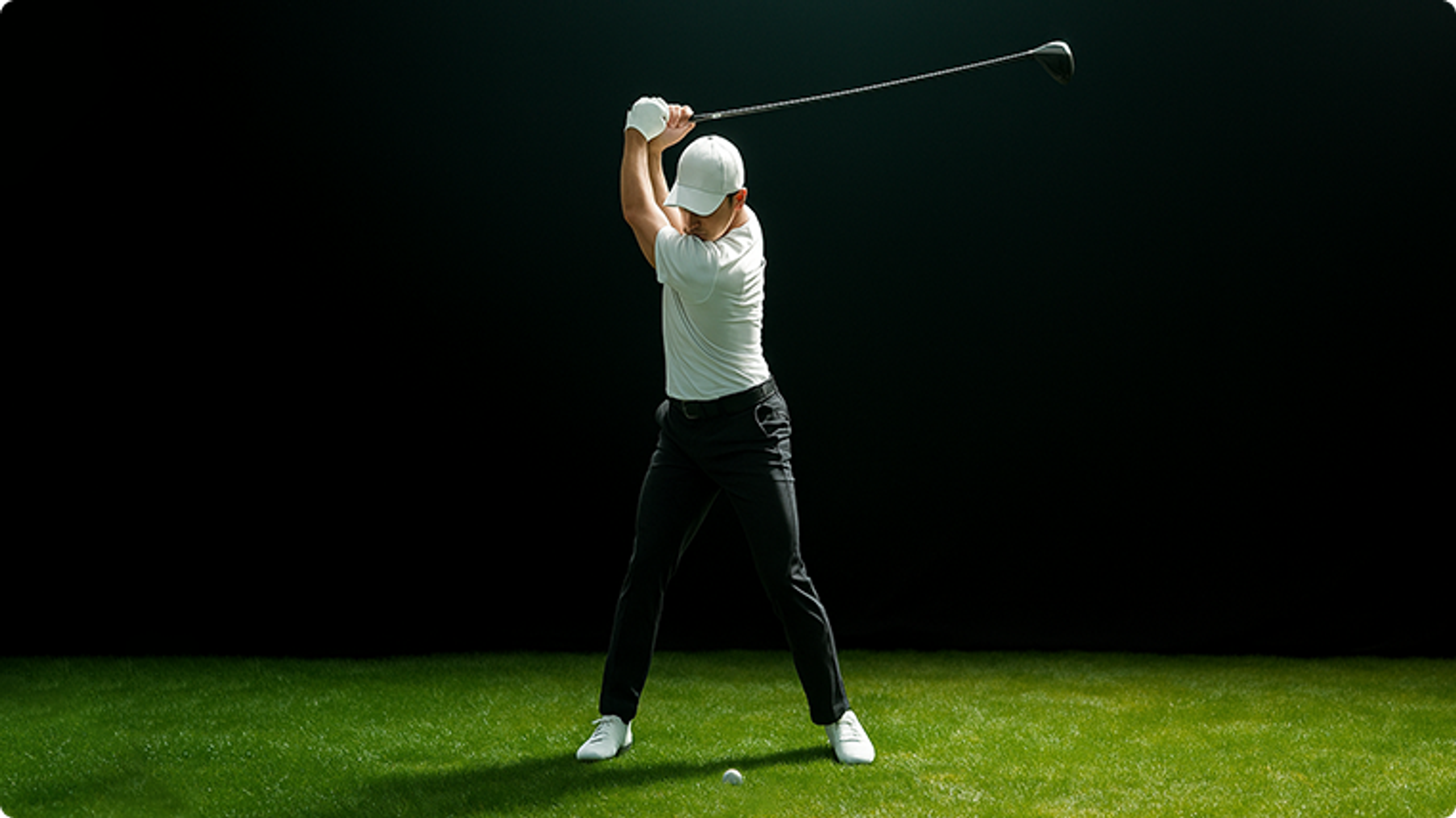
Golfer swinging a club on green grass against a dark background.

The top of the swing is a critical transition point that directly impacts your impact position and shot quality. If this moment breaks down, it can disrupt the entire downswing. That’s why precise positioning and balance at the top are essential. Building a stable, well-balanced top of swing with AI Trainer has made it easier than ever before.

AI Trainer has 20 checkpoints for Top of Swing:
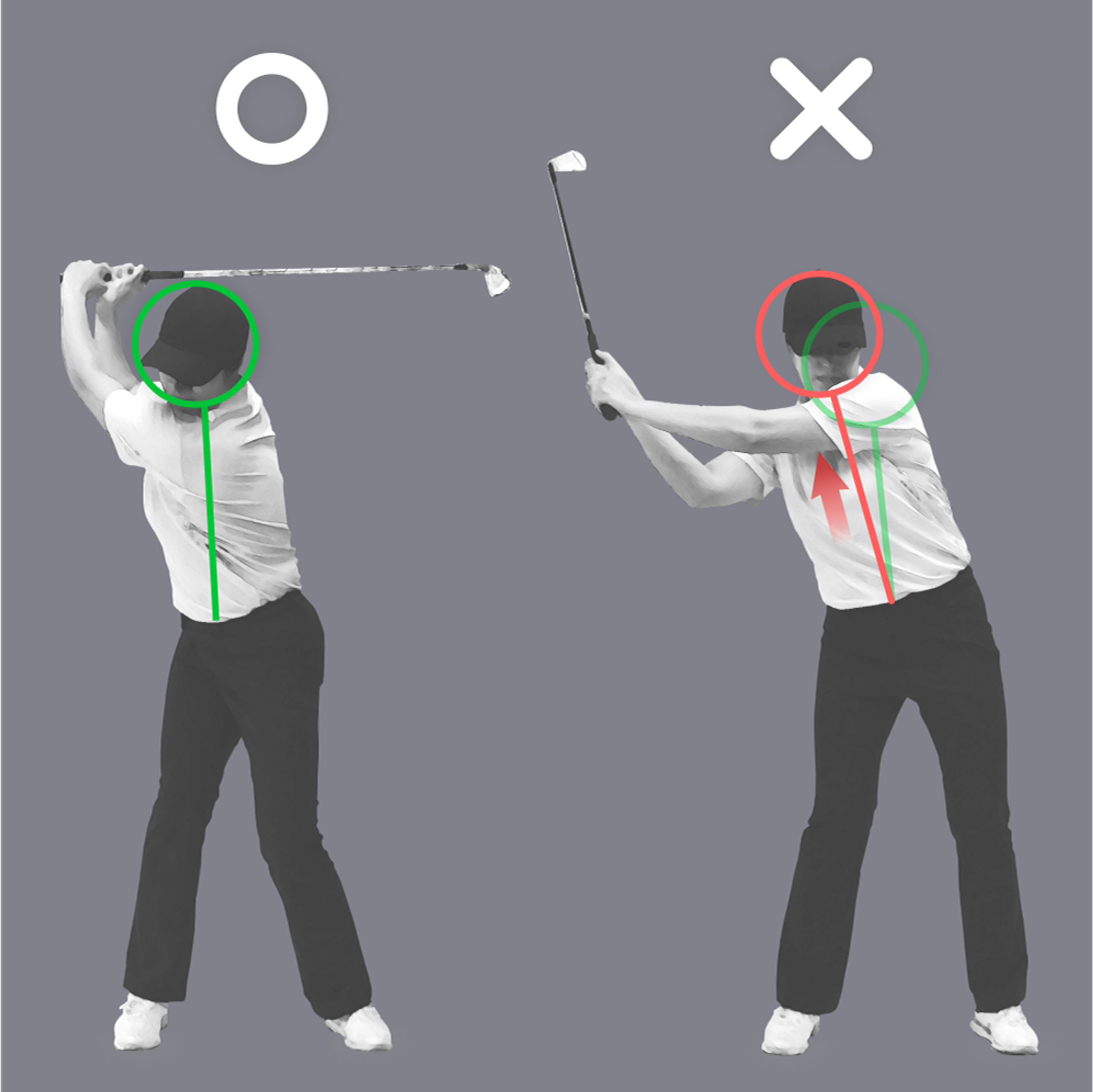
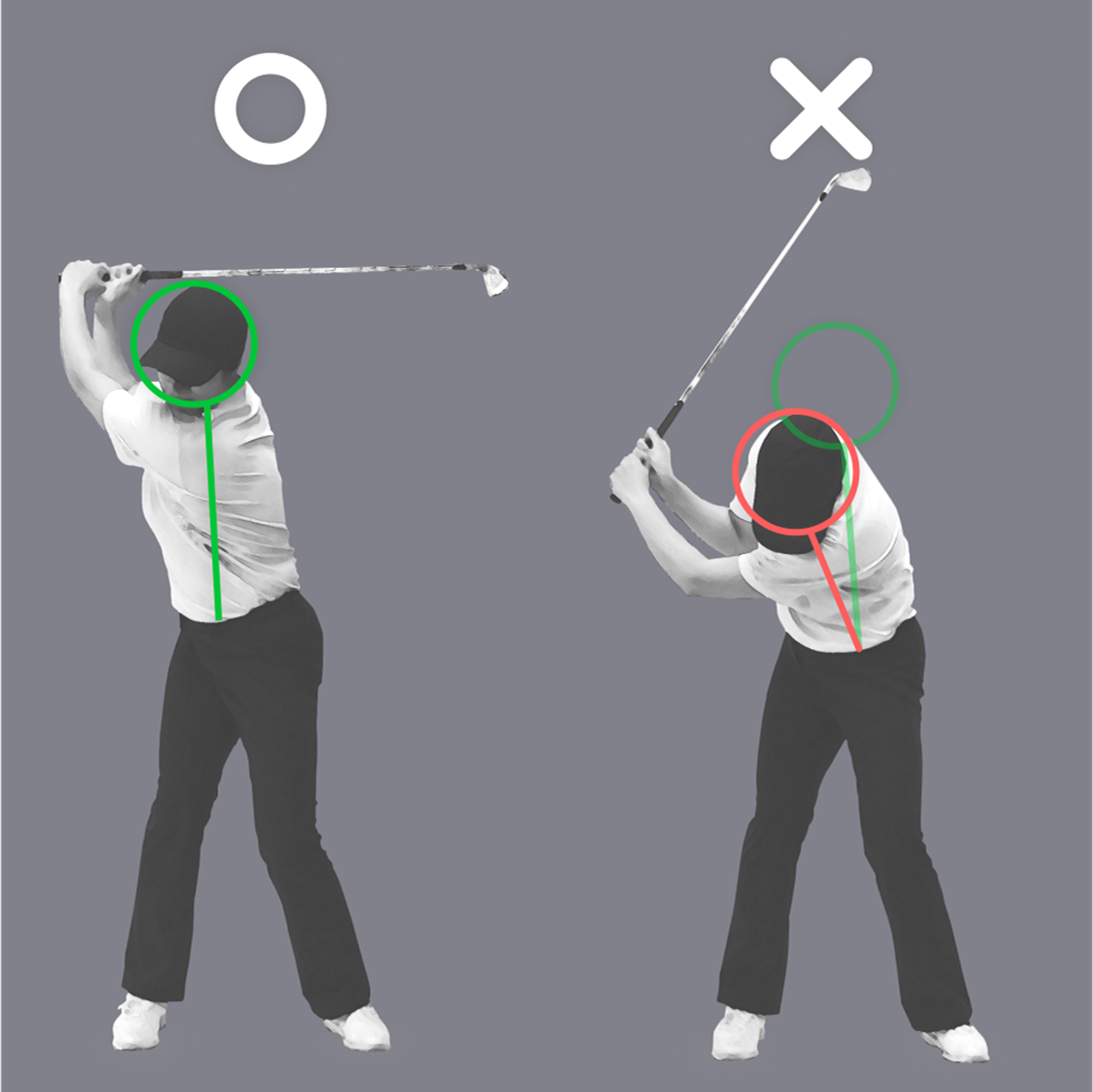
Golf swing guide showing correct stable head and spine versus incorrect head lift and spine shift.

Head lifted

The head is lifted and away from the chest compared to the set up.
Two golfers demonstrating proper (left) and improper (right) head and spine alignment during a golf swing's backswing.

Head dropped

The head is lowered and positioned into the chest compared to the set up.
Golf instruction image comparing correct (left) and incorrect (right) backswing, emphasizing head and body stability versus movement.

Head forward

The head is positioned ahead of the lead shoulder.
A golfer demonstrates correct (left) and incorrect (right) backswing postures, highlighted by instructional lines and arrows.

Head backwards

The head is positioned behind the lead shoulder.
A golf instructional image comparing correct (left) and incorrect (right) backswing postures.

Loss of spine angle

The spine angle has straighted vertically from the pelvis to the shoulders compared to the posture at address.
Golf swing instruction: correct (left) and incorrect (right) head and spine alignment.

Increase of spine angle

The spine angle has increased from the pelvis to the shoulders compared to the posture at address.
Golf instruction comparing proper (left) and improper (right) backswing leg posture, showing bent versus locked knees.

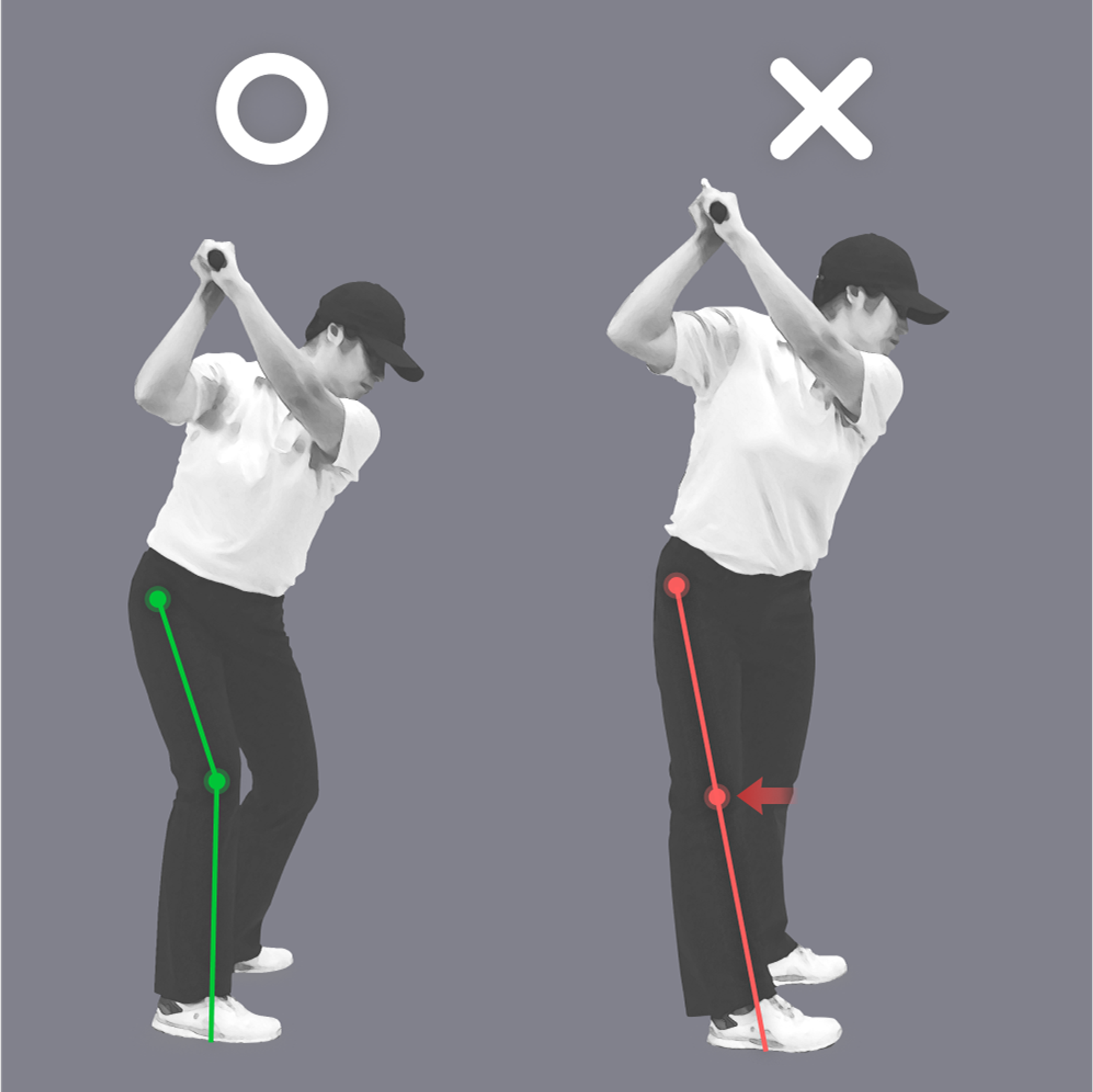
Excessive knee extension

The knees have lost its flex, causing the pelvis to lose its tilt.
Two golf backswing postures: correct with a straight, stable leg (left, green line) and incorrect with a bent, unstable leg (right, red line).

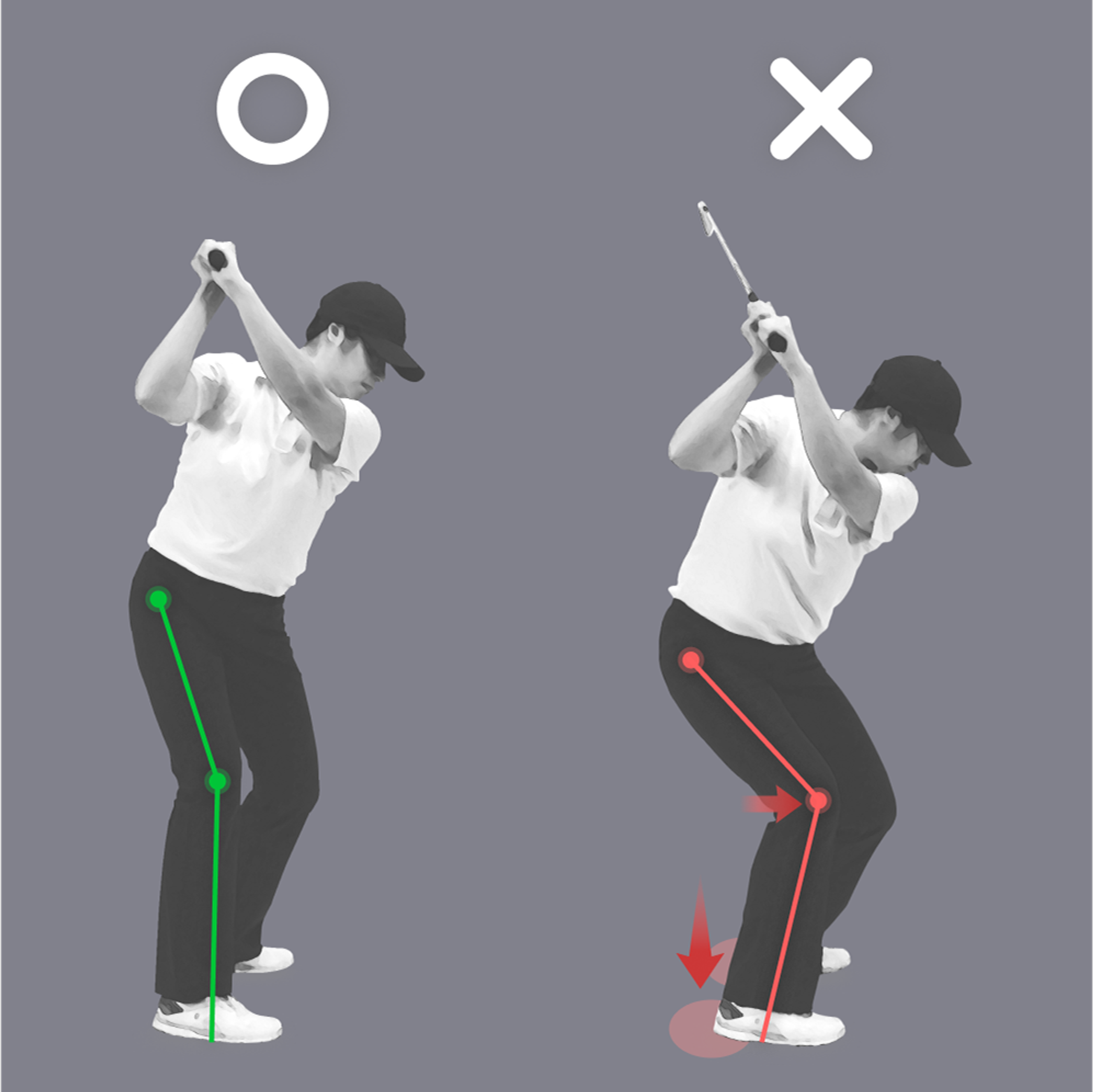
Excessive knee flexion

The knees have increased its flex, causing the pelvis to increase its tilt.
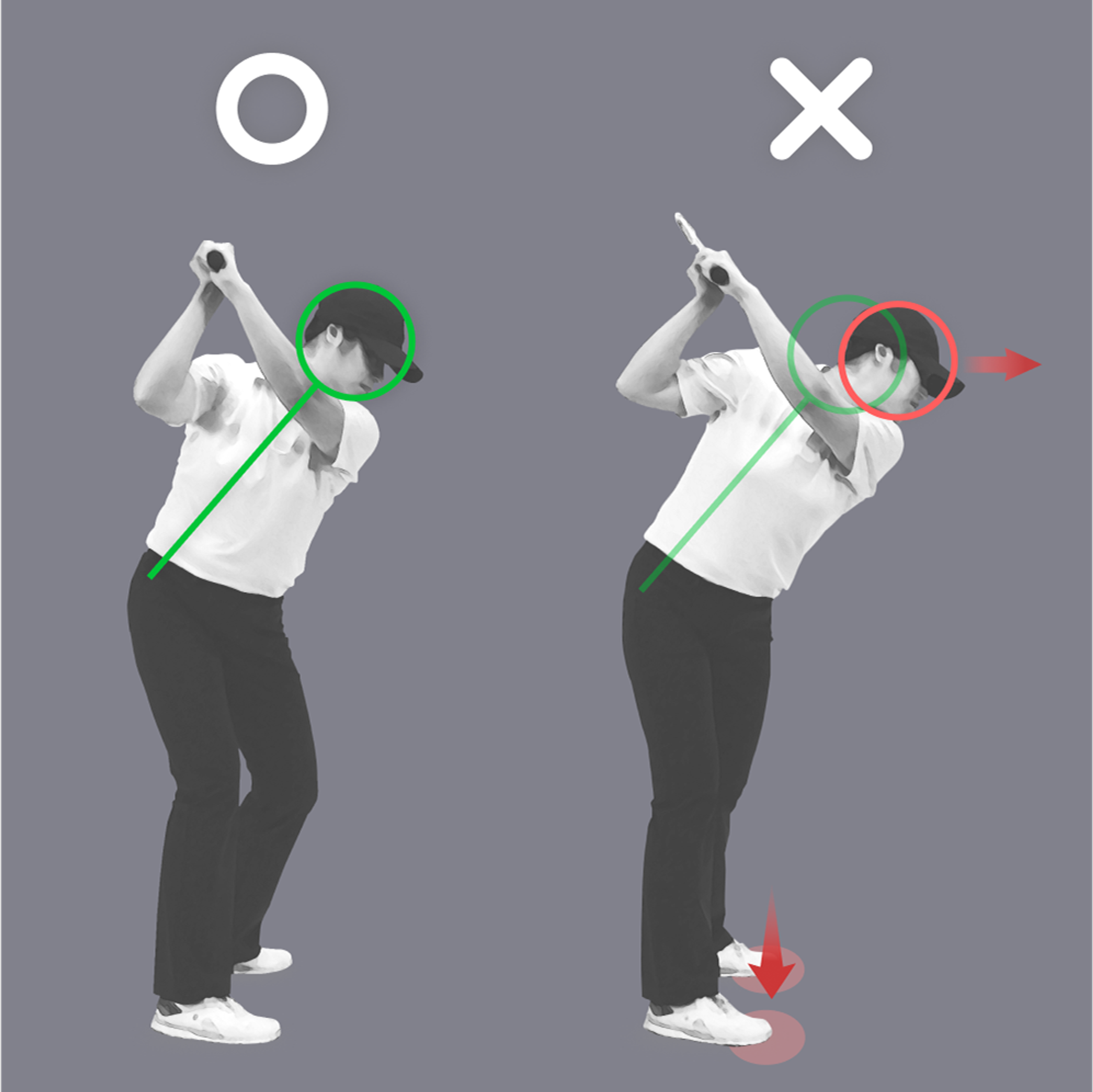
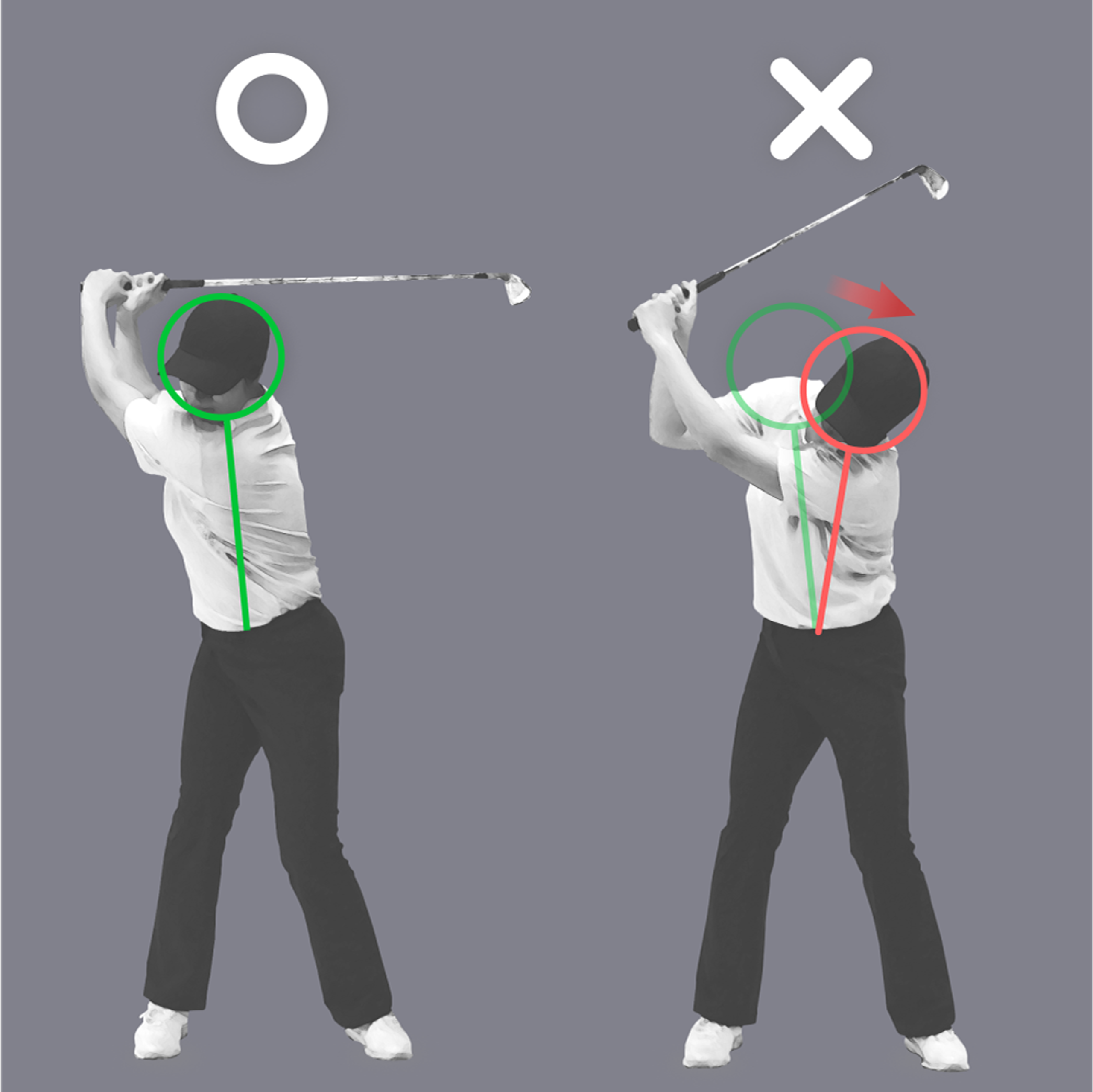
Diagram comparing correct (left) and incorrect (right) head and spine position during a golf backswing.

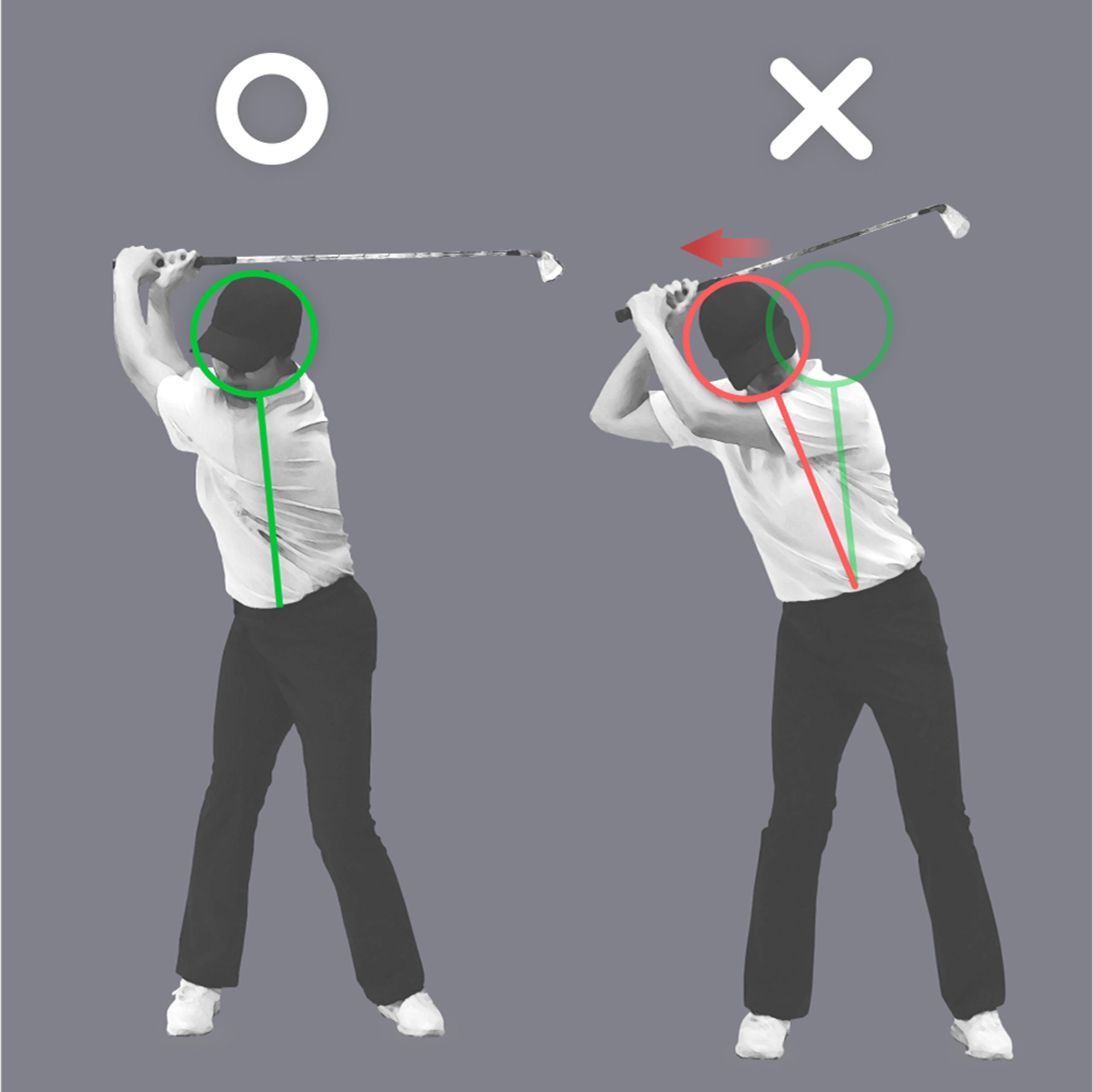
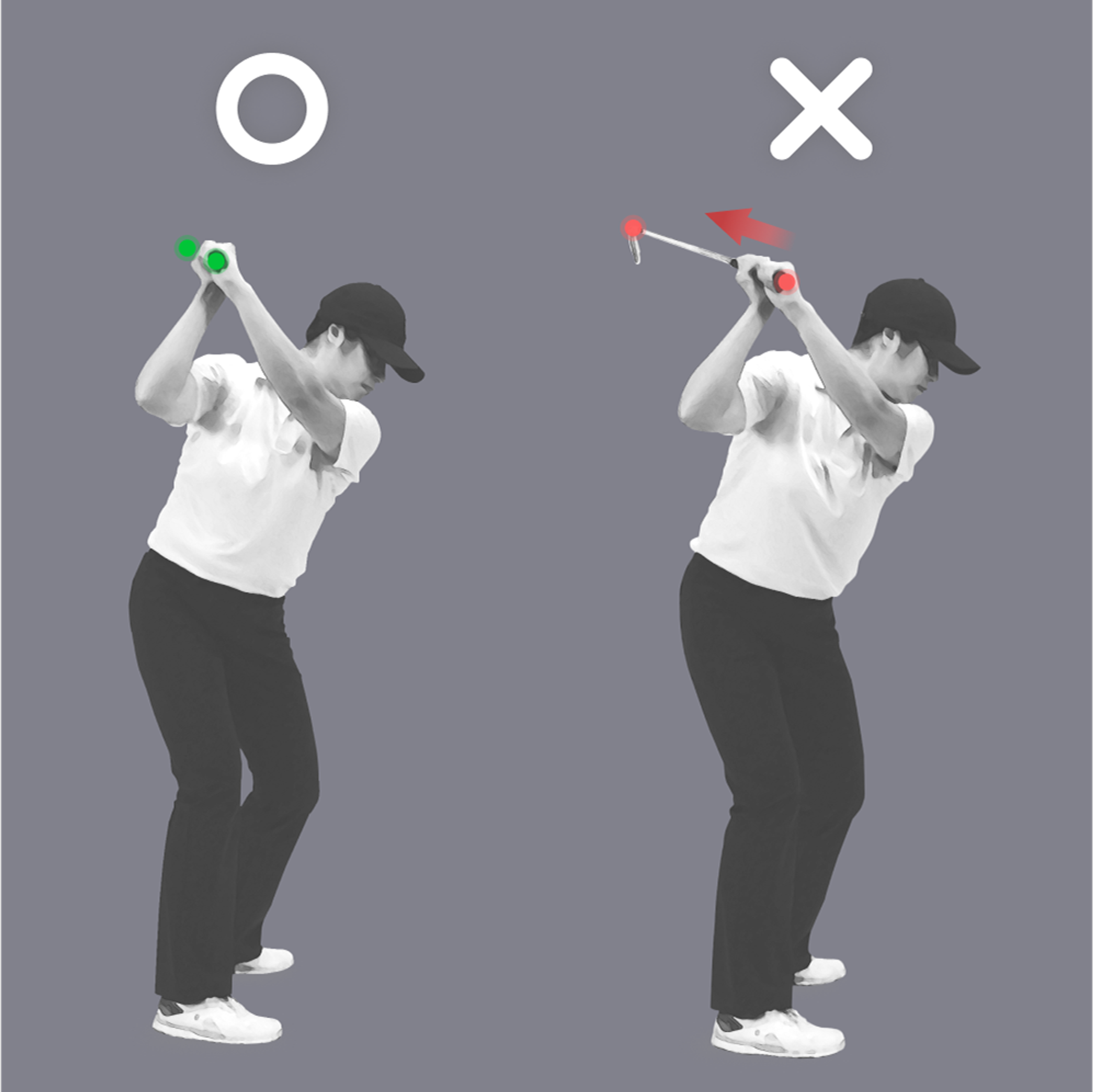
Head away from target

During the backswing, the head moves towards the target direction.
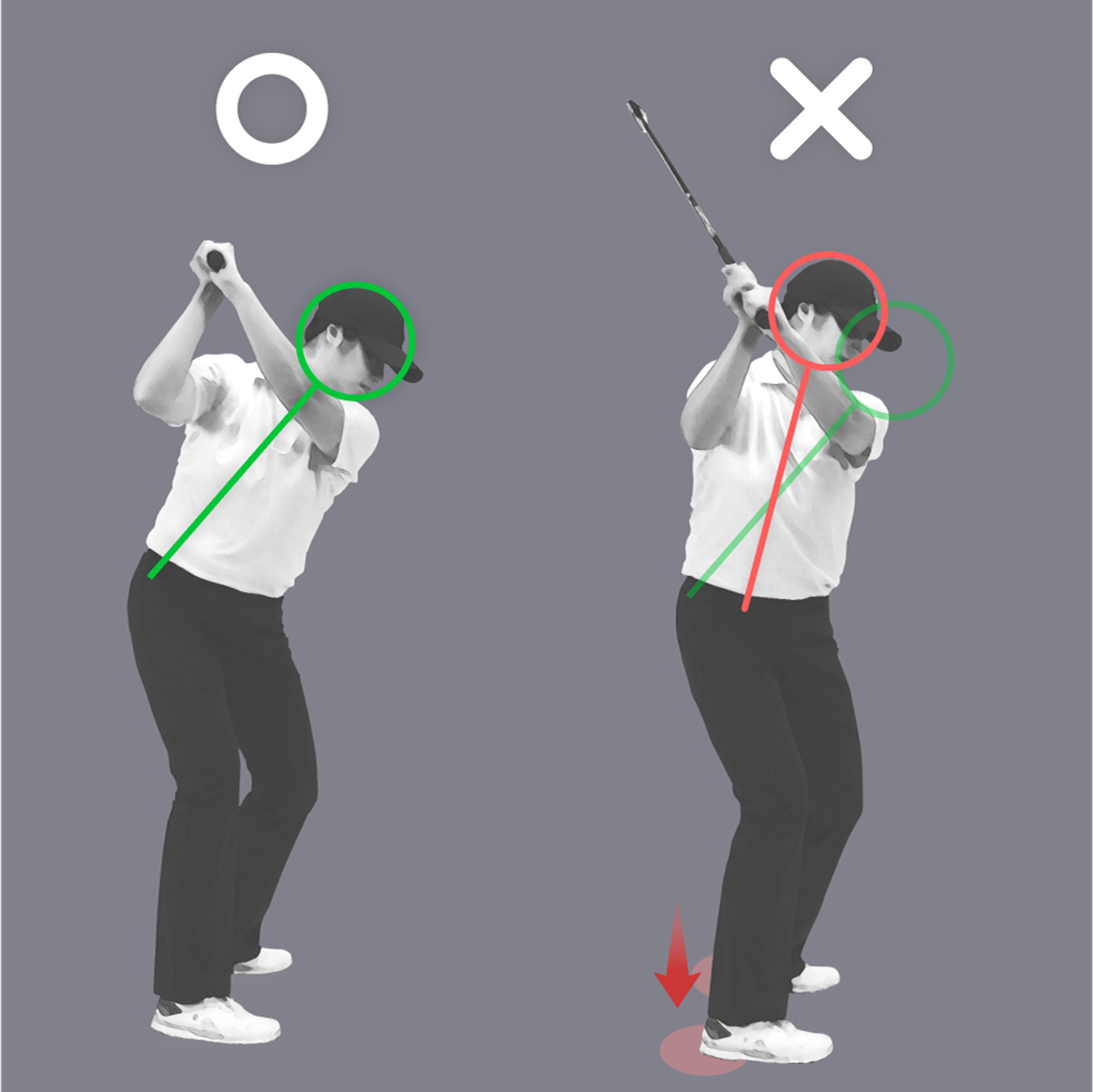
Golf backswing comparison: correct form (stable head, green lines) versus incorrect form (head lift, red lines and arrow).

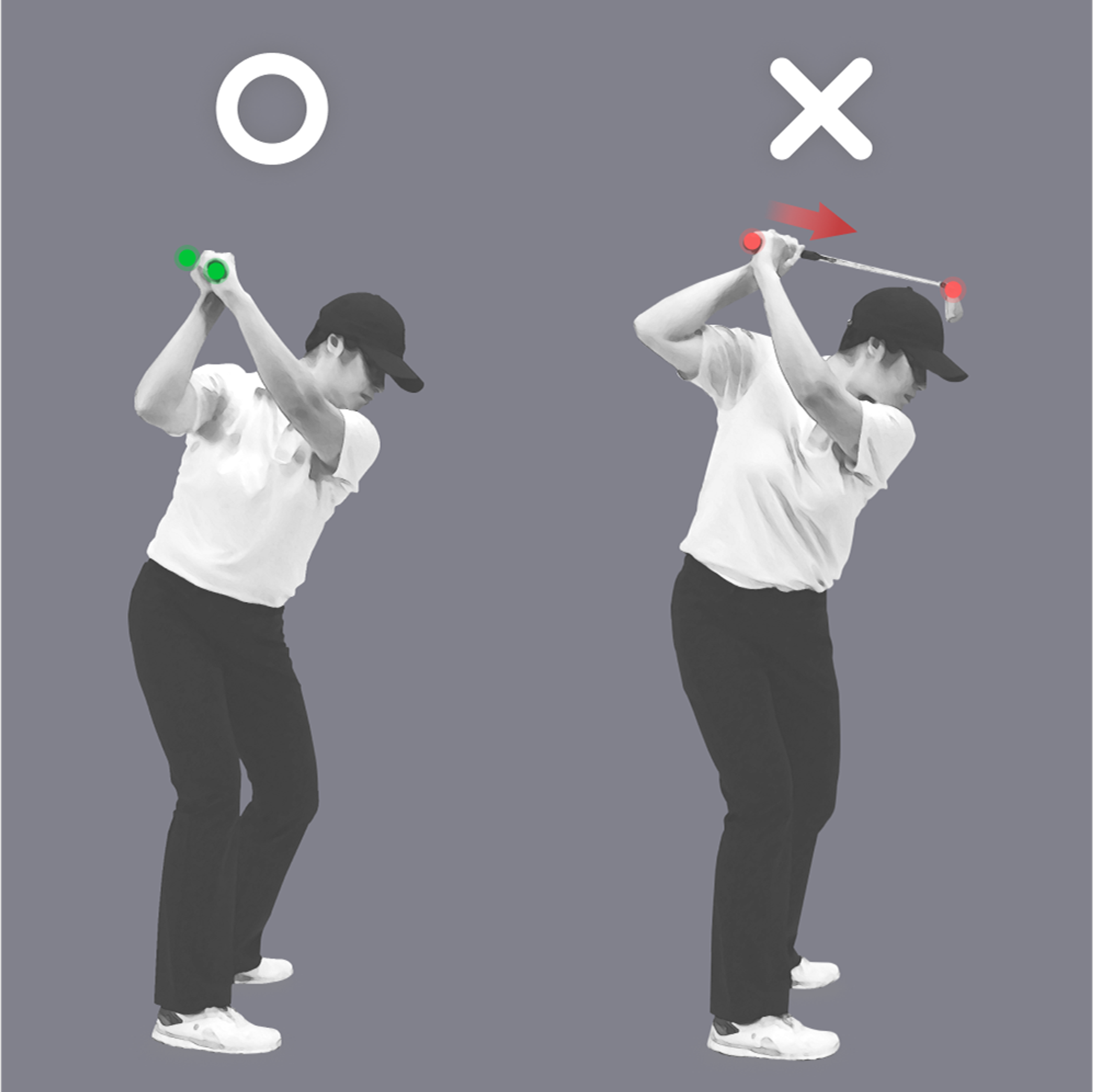
Head towards target

During the backswing, the head moves towards the target direction.
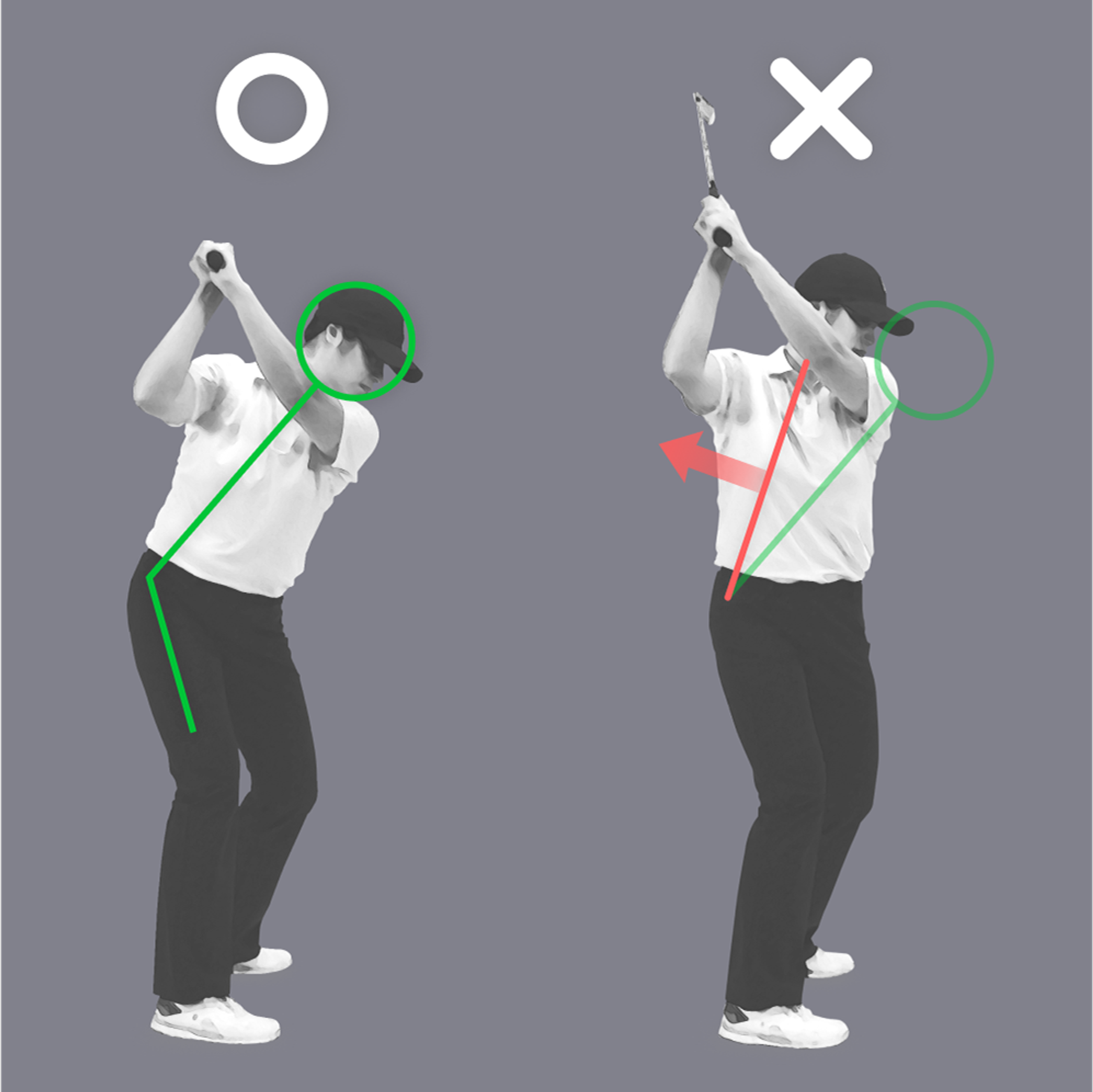
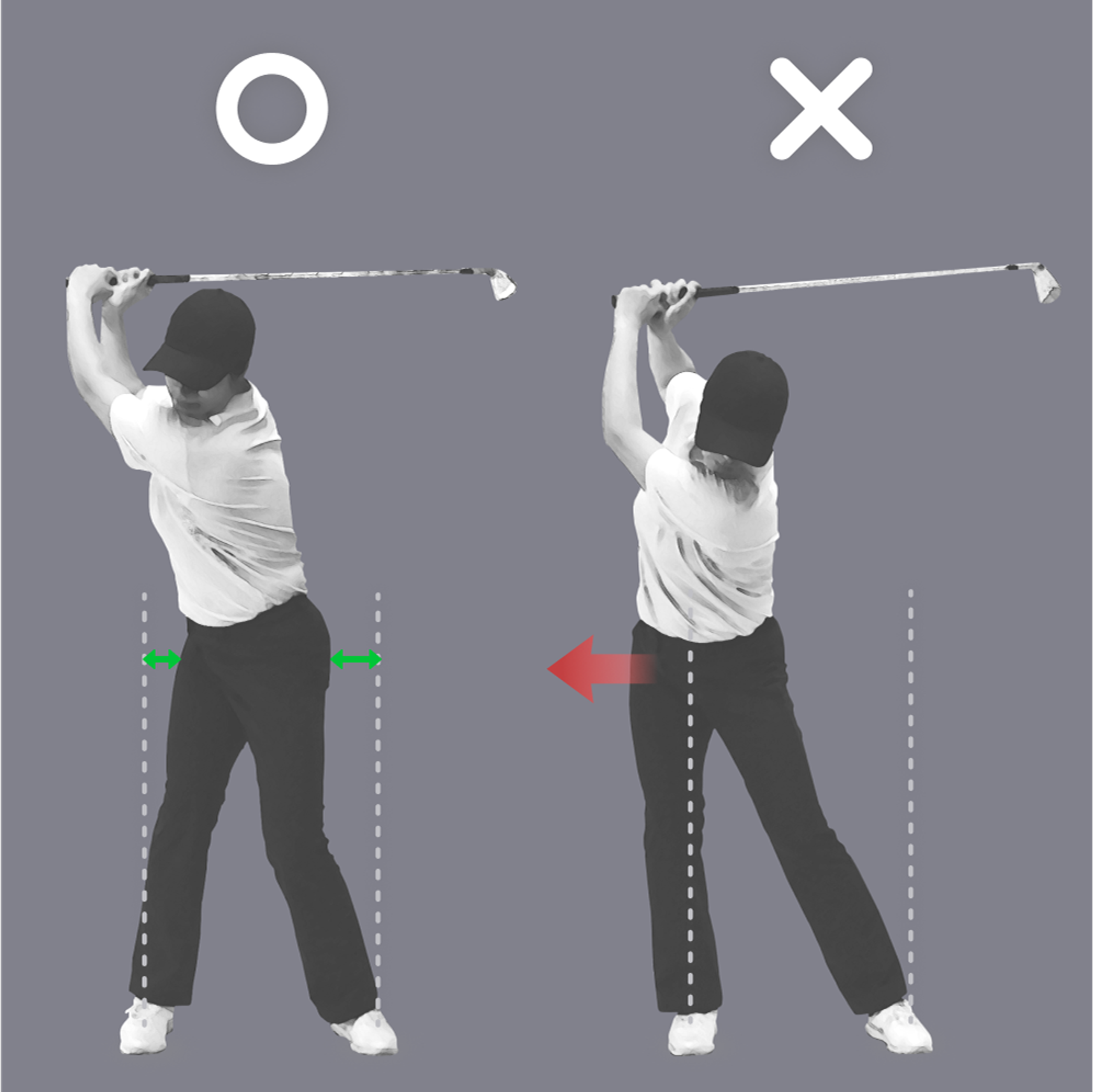
Correct and incorrect golf backswing posture, showing stable hips versus hips shifted left.

Sway

The trail hip is positioned outside of the trail foot. Too much weight is placed on the trail leg.
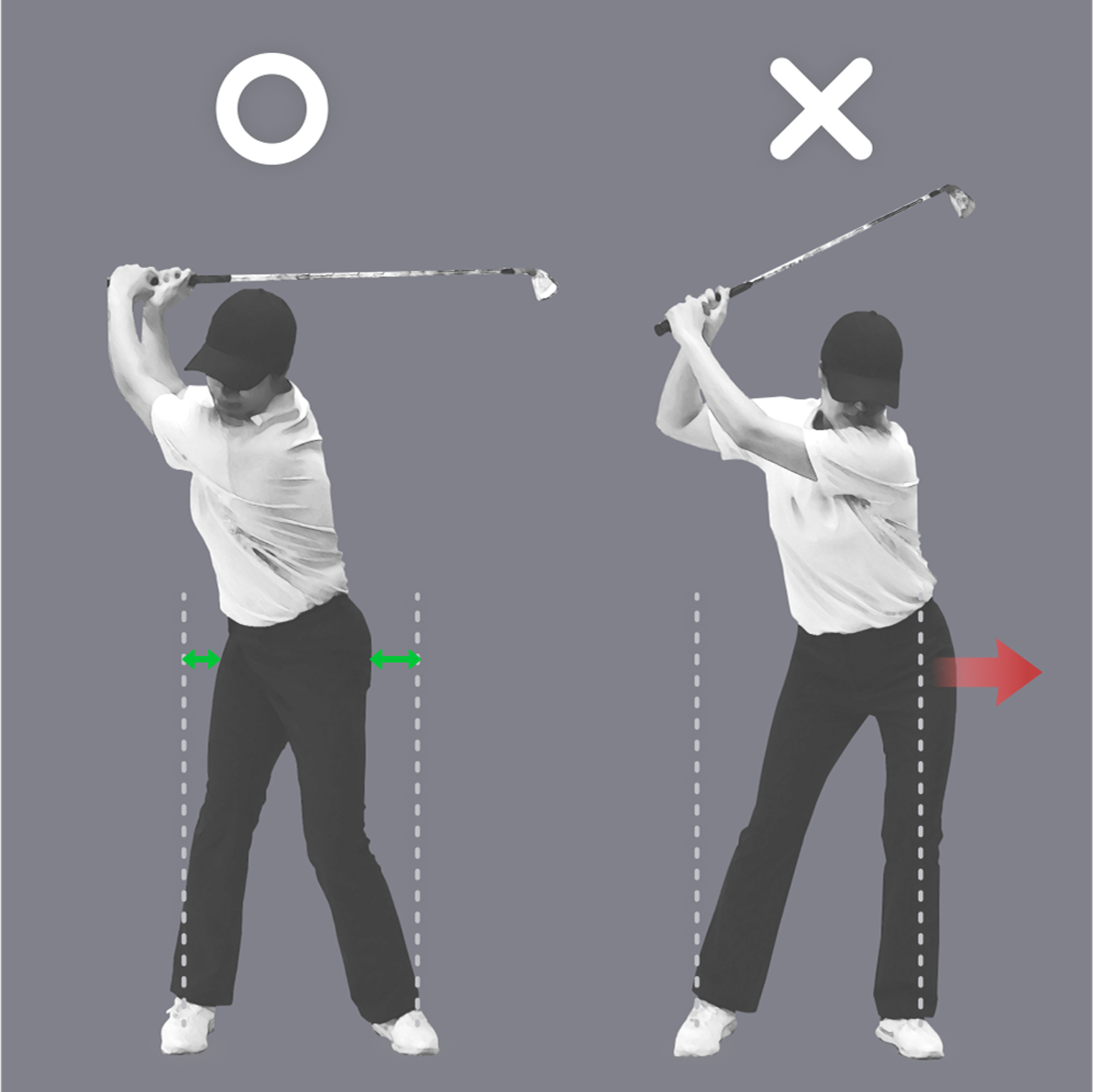
Illustration comparing correct centered hip rotation (left, circle) with incorrect hip sway (right, X) in a golf backswing.

Target side slide

The hips move towards the target on the backswing.
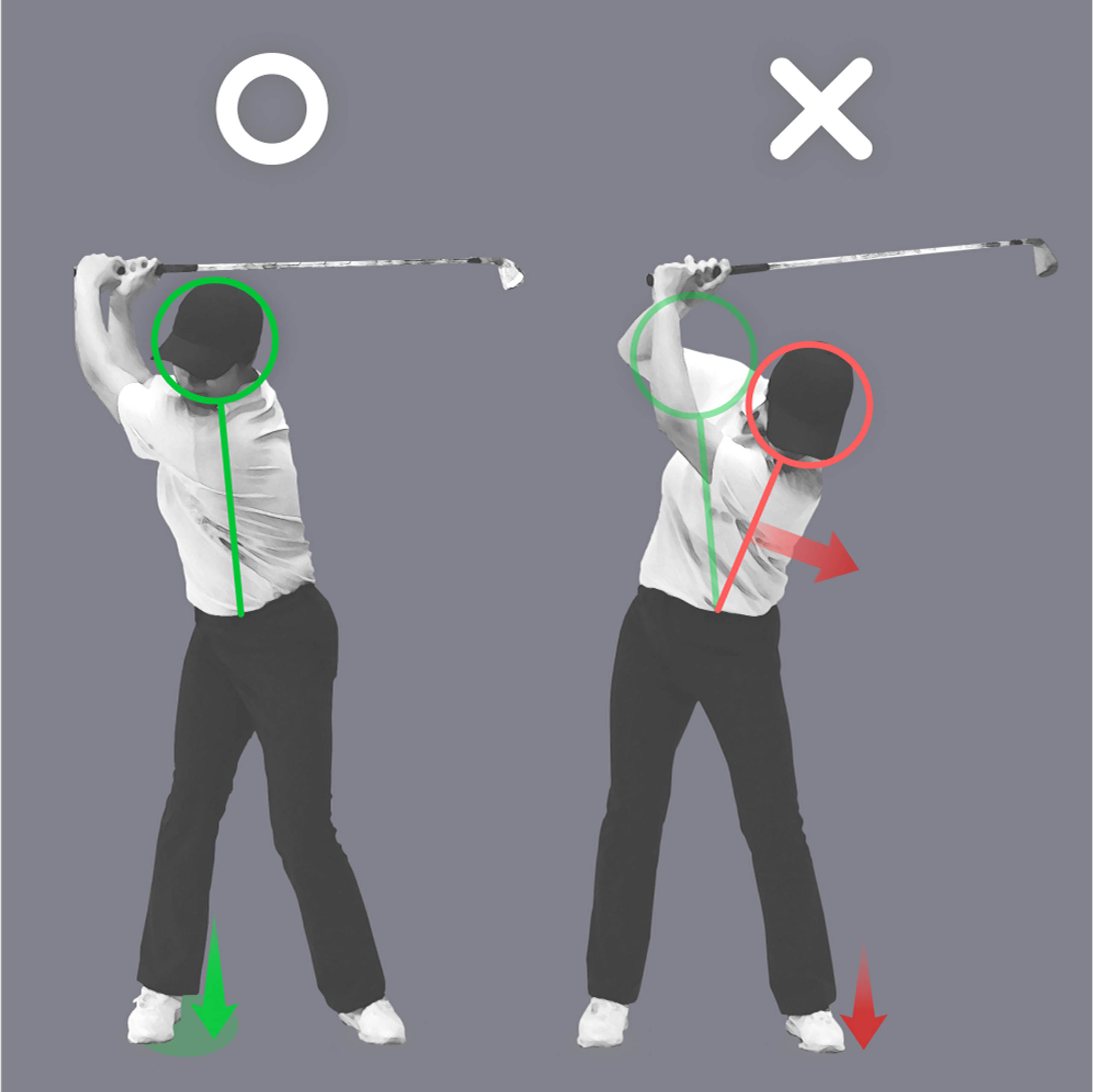
Two images comparing proper golf backswing posture with a stable head and spine to an improper one with head sway and hip slide.

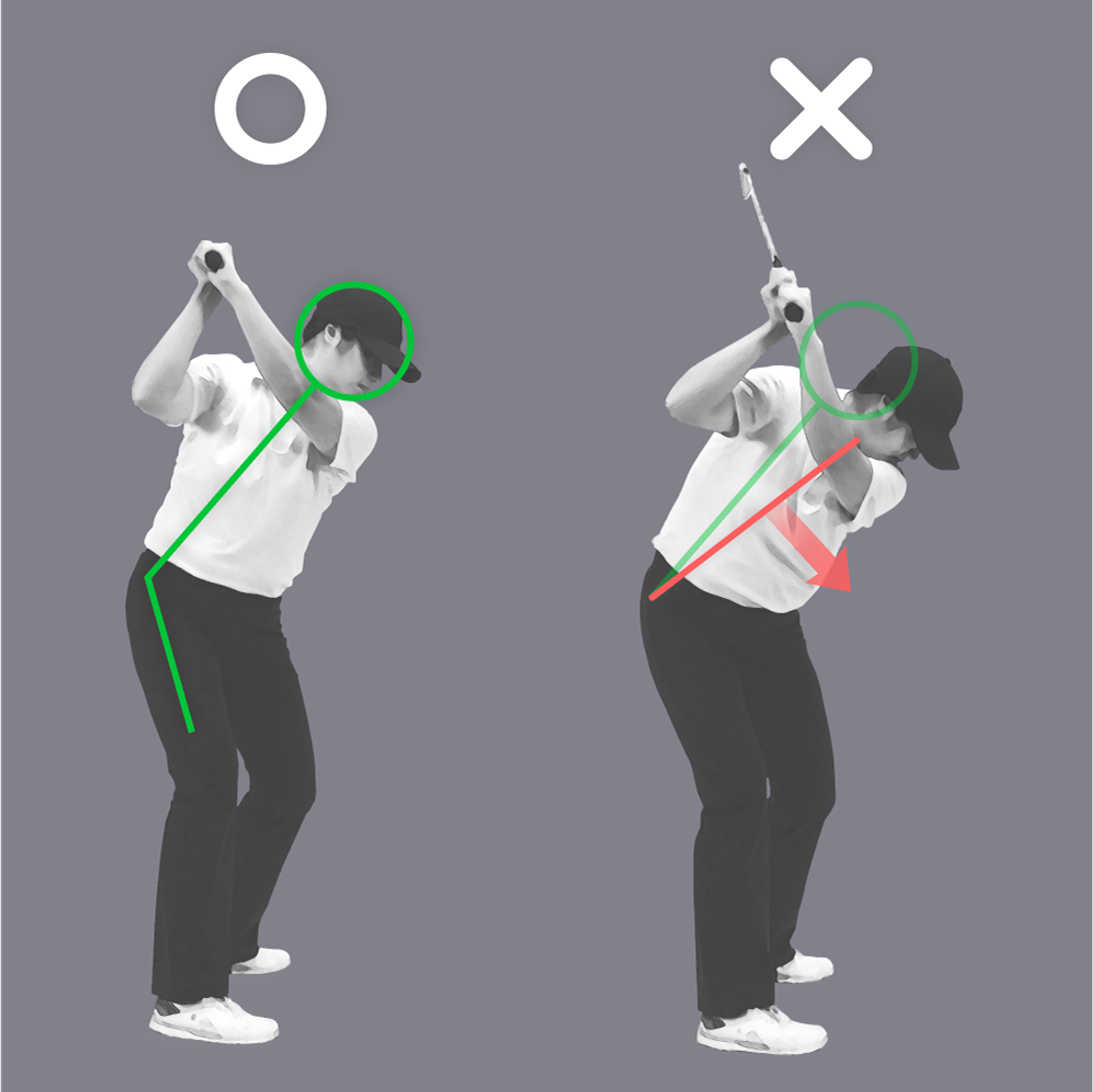
Reverse spine angle

The spine angle is tilted toward the target, and the trail shoulder is higher than the lead shoulder.
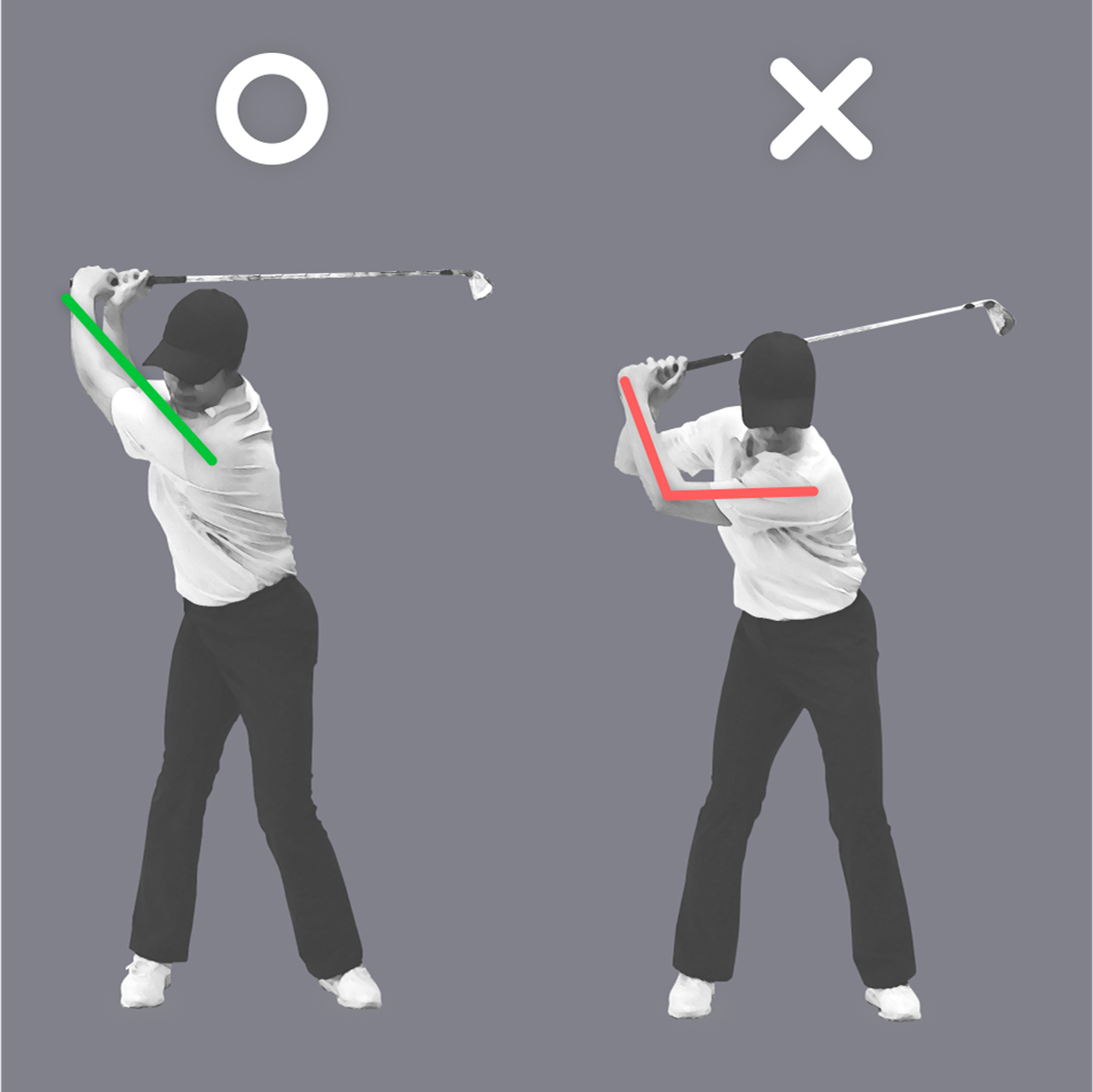
A golf instruction image showing correct backswing arm and club position (left, green lines) versus an incorrect "flying elbow" and bent wrist (right, red lines).

Lack of wrist hinge

The wrist does have not extension or hinge at the top of the swing.
Golf backswing comparison: proper arm and club angle (left, green) versus improper (right, red).

Overswing

The length of the backswing is too long, past parallel to the ground.
Comparison of a golfer's backswing showing a correct club position on the left and an overswing on the right.

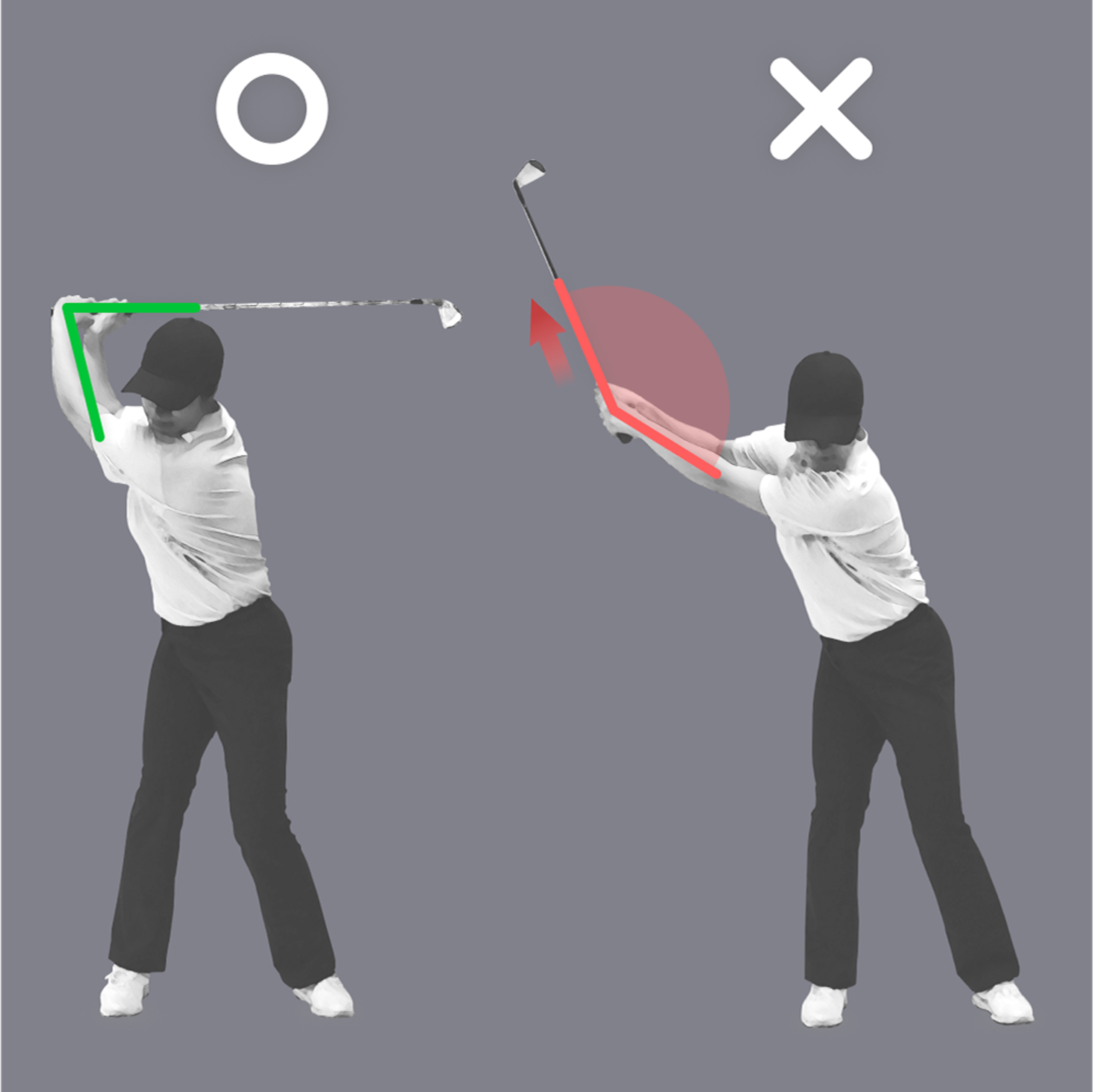
Laid off

The club head and shaft are pointed too far behind the player.
Correct (O) and incorrect (X) golf backswing techniques illustrated.

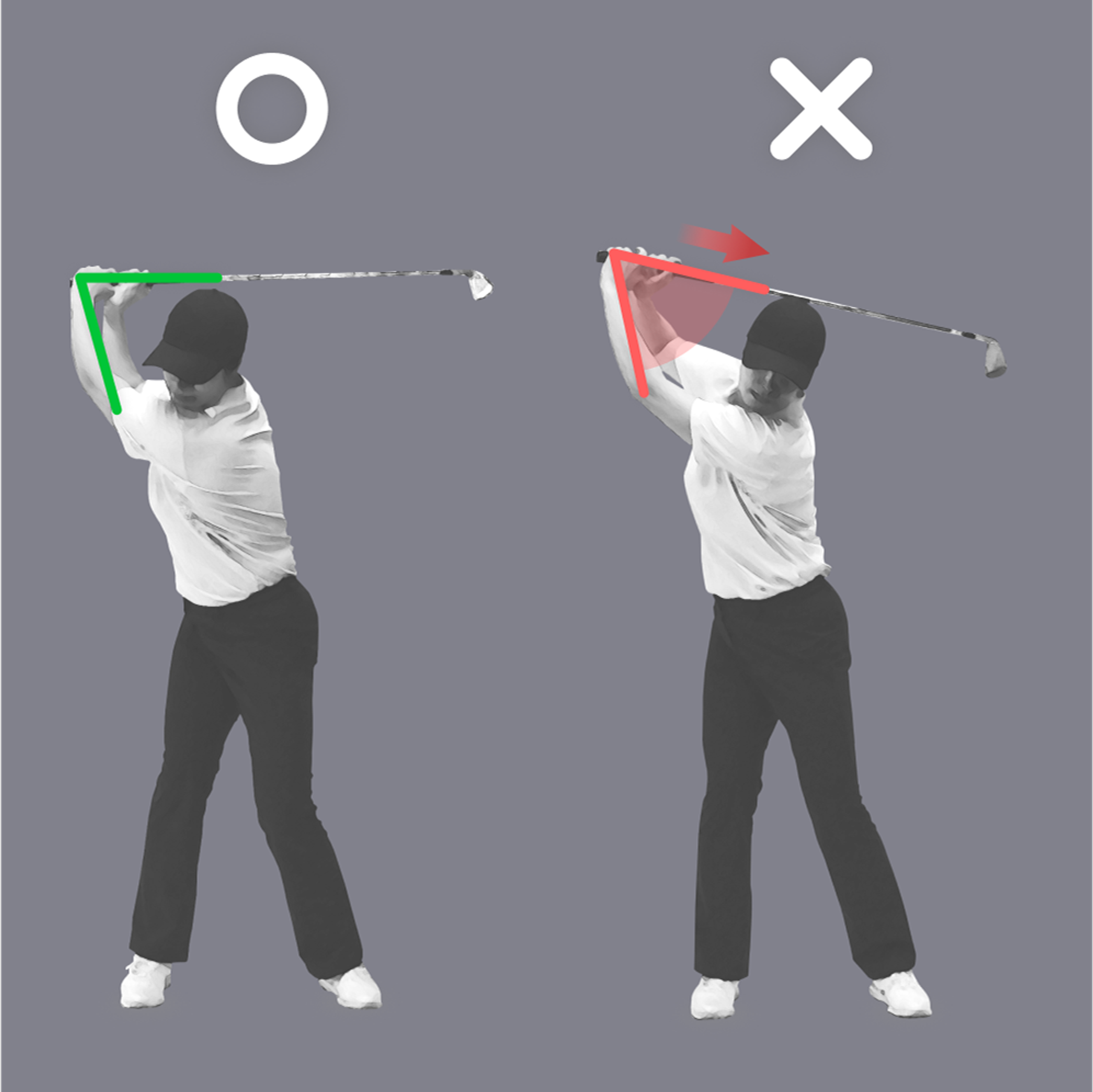
Crossover

The club head and shaft are pointed too far across the shoulders of the player.
Golf backswing comparison: correct form with a straighter left arm (left) versus incorrect form with a sharply bent right arm (right).

Bent lead arm

The lead elbow flexes.
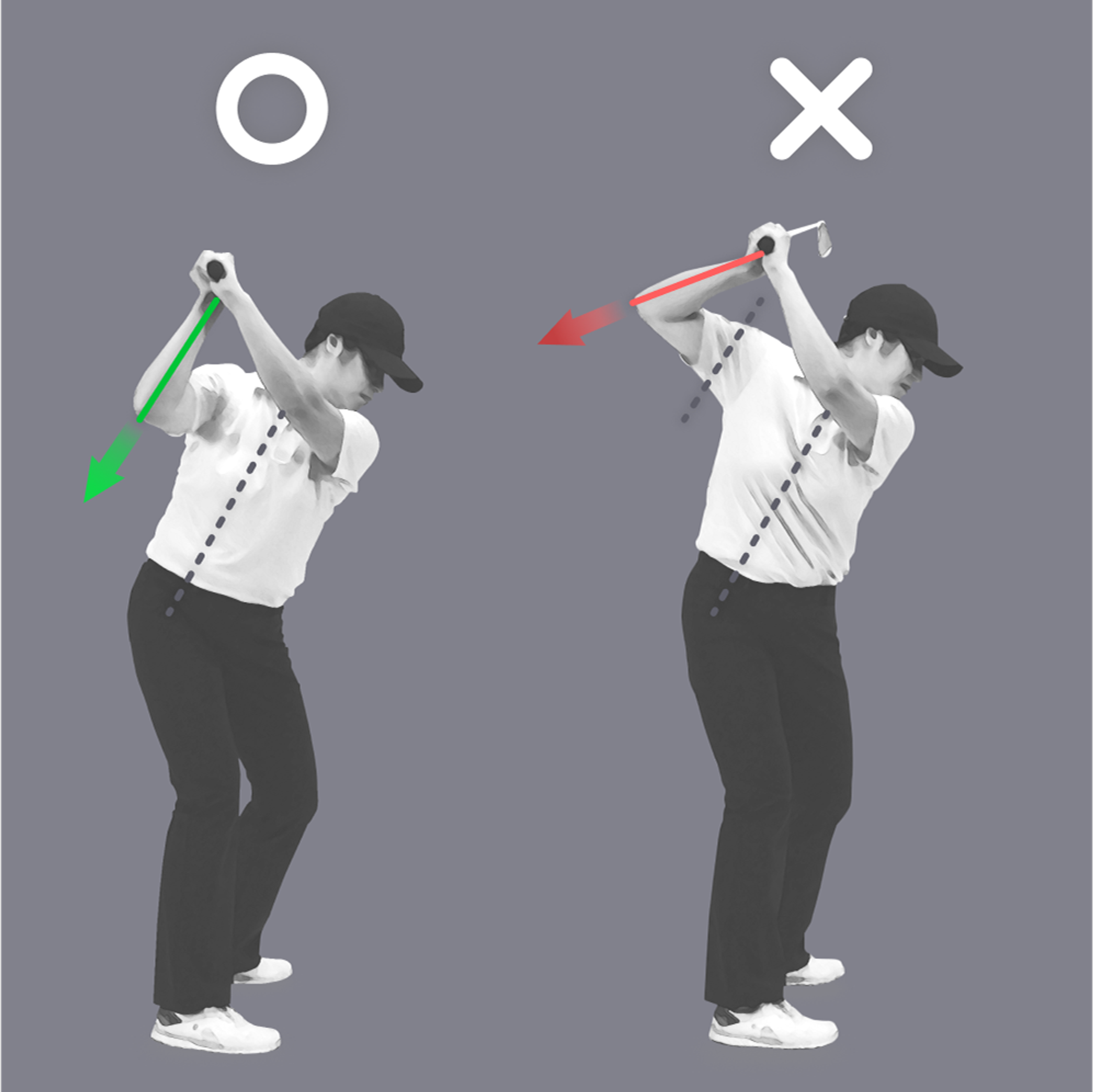
Diagram comparing correct and incorrect golf backswing arm positions, indicated by green (left) and red (right) arrows.

Flying elbow

At the top of the swing, the trail arm seperates from the body.
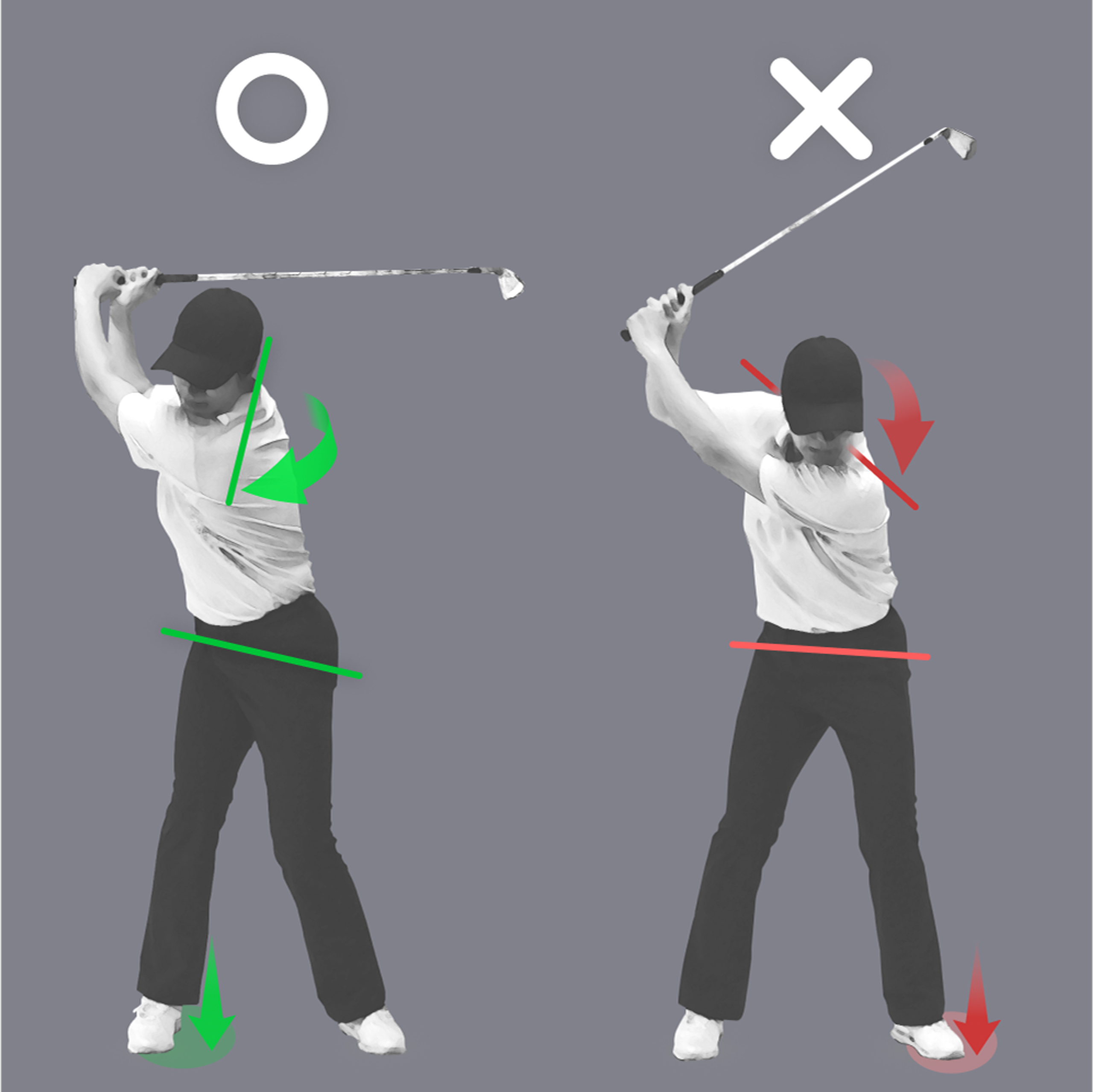
Diagram comparing correct (O, green arrows) and incorrect (X, red arrows) golf backswing postures.

Lack of shoulder rotation

There is a lack of the proper shoulder rotation.

As clearly shown, there is a lot to take note of when at the top of your swing. Without our trainer, it can be difficult to pinpoint what exactly it is you need to focus on. Luckily, with the help of our AI trainer, it has never been easier. It's important to note that while you can of course use the AI trainer feature with any club, currently the driver and 7-iron have integrated modes available. What this means is that the AI Trainer’s evaluation criteria may vary depending on the selected club type during the session. As we improve and update our AI Trainer, more features will be available to use to help you achieve more satisfying and confident swings. Check in periodically on these pages for any new features available through the AI trainer. We appreciate your continued interest and support! If you already have our hardware and are interested in using the AI software, for only $99/year you can do so by purchasing through your my.uneekor account here.

Please note that this software requires our Swing Optix® hardware. You can purchase this by clicking here.